
Alert Lipsum Text Invades Dev site!

Lorem Ipsum is simply dummy text of the printing and typesetting industry. Lorem Ipsum has been the industry’s standard dummy text ever since the 1500s, when an unknown printer took a galley of type and scrambled it to make a type specimen book.
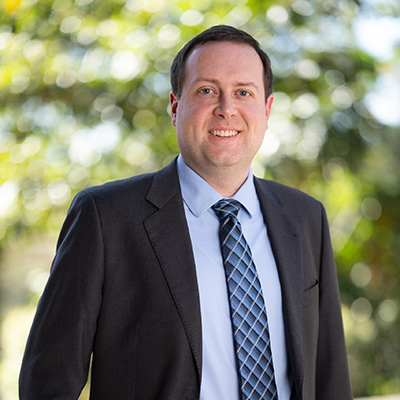
Benjamin Noonan

Professor of Old Testament & Hebrew
Associate Director of the Doctoral Program in Biblical Studies
Seminary & School of Counseling
Ben Noonan

Education

  • PhD, Hebrew Union College–Jewish Institute of Religion
  • MPhil, Hebrew Union College–Jewish Institute of Religion
  • MA, Wheaton College
  • BS, Wheaton College

Biography

Dr. Noonan is passionate about helping students engage God’s Word carefully and thoughtfully, with an eye toward its significance for both ministry and daily life. He brings a distinctive combination of scholarly expertise, classroom experience, and ministry involvement to his teaching. He earned his PhD in Hebrew Bible and Ancient Near Eastern Studies and has taught in a variety of settings, including universities and theological institutions in the United States, Costa Rica, and Ethiopia. These experiences have deepened his desire to prepare students to serve Christ effectively across diverse academic, ministerial, and cultural contexts.

His research focuses on the Old Testament, the Pentateuch, Biblical Hebrew, and the historical and linguistic world of the Bible. As the author of several books and a number of scholarly publications, Dr. Noonan connects academic study with the responsible interpretation and application of Scripture. He also contributes to the wider academic community through editorial and review work and leadership in professional organizations, including the Institute of Biblical Research. As Associate Director of CIU’s Doctoral Program in Biblical Studies, he mentors emerging scholars and helps shape the next generation of biblical scholarship. Across these various roles, he cultivates scholarship that serves the church, strengthens the academy, and advances a more faithful understanding of Scripture.

Dr. Noonan particularly enjoys making complex subjects accessible and showing how the study of the language, history, and culture of the biblical world can bring greater clarity to the biblical text. His classes combine intellectual rigor with a deep commitment to Scripture, encouraging students to think critically, ask thoughtful questions, and grow in both their knowledge of God’s Word and their love for Christ and His mission. His aim is not simply to impart knowledge, but to develop wise and capable leaders who can interpret, communicate, and apply Scripture effectively in their own contexts.

Outside the classroom, Dr. Noonan enjoys serving in his local church, where he has led community groups and taught. He is an avid fan of all things J.R.R. Tolkien and enjoys reading, hiking—especially in Rocky Mountain National Park—and playing piano. He and his wife, who also holds a PhD in Hebrew Bible and teaches at CIU, enjoy raising their very creative daughter. Above all, Dr. Noonan desires to help others understand Scripture deeply, serve their communities well, and glorify God through a lifetime of learning, teaching, and ministry.

Selected Publications & Presentations

Books

  • Hebrew Grammar Beyond the Basics: An Exegetical Syntax of the Old Testament (Grand Rapids, MI: Zondervan Academic, forthcoming)
  • Advances in the Study of Biblical Hebrew & Aramaic: New Insights for Reading the Old Testament (Grand Rapids: Zondervan, 2020)
  • Non-Semitic Loanwords in the Hebrew Bible: A Lexicon of Language Contact, Linguistic Studies in Ancient West Semitic 14 (Winona Lake, IN: Eisenbrauns, 2019)
  • “Where Shall Wisdom Be Found?” A Grammatical Tribute to Professor Stephen A. Kaufman, co-edited with Hélène M. Dallaire and Jennifer E. Noonan (Winona Lake, IN: Eisenbrauns, 2017)

Book Chapters

  • “The Egyptian Loanwords in the Exodus and Wilderness Traditions: Stylistic Literary Devices or Authentic Historical Artifacts?” in Exploring the Composition of the Pentateuch, Volume 3/1, eds. Kenneth Bergland, Roy E. Gane, Benjamin Kilchör, and A. Rahel Wells, Bulletin for Biblical Research Supplement 31 (Winona Lake, IN: Eisenbrauns, 2026), 161–202
  • “Loanwords,” in Rethinking the Composition of the Pentateuch, eds. Kenneth Bergland, Roy E. Gane, Gary A. Rendsburg, and A. Rahel Wells (Peabody, MA: Hendrickson Academic, 2026), 133–138
  • “An Amazing Technicolor Dreamcoat: The Style and Symbolism of Joseph’s Garment in Genesis 37,” in The Body: Adorned, Cultured, and Embodied, eds. Kristine Henriksen Garroway, Christine E. Palmer, and Angela Roskop Erisman (Cincinnati, OH: Hebrew Union College Press, 2022), 319–360
  • “The Patriarchs’ Altar-Building as Anticipation of the Israelite Conquest,” For Us, But Not to Us: Essays on Creation, Covenant, and Context in Honor of John H. Walton, eds. Adam E. Miglio, Caryn A. Reeder, Joshua T. Walton, and Kenneth C. Way (Eugene, OR: Pickwick, 2020), 254–275
  • “Egyptian Loanwords as Evidence for the Authenticity of the Exodus and Wilderness Traditions,” in “Did I Not Bring Israel Out of Egypt?” Biblical, Archaeological, and Egyptological Perspectives on the Exodus Narratives, eds. James K. Hoffmeier, Alan R. Millard, and Gary A. Rendsburg, Bulletin for Biblical Research Supplement 13 (Winona Lake, IN: Eisenbrauns, 2016), 49–67

Journal Articles

  • “On the Efficacy of the Atoning Sacrifices: A Levitical Biblical Theology of Sacrifice,” Bulletin for Biblical Research 31 (2021): 285–318
  • “High-Handed Sin and the Promised Land: The Rhetorical Relationship between Law and Narrative in Numbers 15,” Journal for the Study of the Old Testament 45.1 (2020): 79–92
  • “Can Loanwords Be Used to Date Biblical Texts, and If So, How?” Journal for Semitics 29.2 (2020): 1-19
  • “Daniel’s Greek Loanwords in Dialectal Perspective,” Bulletin for Biblical Research 28 (2018): 575–603
  • “Unraveling Hebrew שַׁעַטְנֵז,” Journal of Biblical Literature 135 (2016): 95–101
  • “There and Back Again: ‘Tin’ or ‘Lead’ in Amos 7:7–9?” Vetus Testamentum 63 (2013): 299–307
  • “Did Nehemiah Own Tyrian Goods? Trade between Judea and Phoenicia during the Achaemenid Period,” Journal of Biblical Literature 130 (2011): 281-298
  • “Abraham, Blessing, and the Nations: A Reexamination of the Niphal and Hitpael ofברך  in the Patriarchal Narratives,” Hebrew Studies 51 (2010): 73–93

Blogs and Podcasts

Recognitions & Awards

  • ATS Innovation Grant, Association of Theological Schools, 2017
  • HUC-JIR Graduate Tuition Scholarship, Hebrew Union College, 2005–2009
  • Richard J. Scheuer Israel Archaeology Scholarship, Hebrew Union College, 2006
  • Magna cum laude Graduation Honors, Wheaton College, 2004
  • Randall D. Isaac Physics Merit Scholarship, Wheaton College, 2003–2004
  • Dean’s List Honors, Wheaton College, 2000–2005

Watch Graduation LIVE

Undergraduate Ceremony
Saturday, May 2 • 11:00am

Watch Graduation LIVE

Graduate & Doctoral Ceremony
Saturday, May 2 • 8:00am

Countdown to Graduation

Saturday, May 2

days
hours
minutes
seconds